What Is a Cooling Blanket? Types, Science & Who Needs One
A cooling blanket pulls body heat away instead of trapping it. Learn the four cooling mechanisms, Q-max ratings, best materials, and who really needs one.
Jul 2026· 19 min read
Key takeaways
A cooling blanket is built for heat dissipation, not insulation — it pulls body heat and moisture away instead of trapping them like regular bedding.
Every cooling blanket uses some mix of four passive mechanisms — breathable weaves, moisture-wicking, cool-touch conduction (Q-max), and phase-change buffering — so match the mechanism to your problem.
Look for a published Q-max of at least 0.2 (0.3+ for hot climates), disclosed fiber content, and OEKO-TEX certification; "ice silk" with no specs is often rebranded polyester.
The evidence is promising but modest: cooling bedding genuinely helps when trapped heat is the problem, but it won't replace air conditioning or treat the medical causes of night sweats.
Consumer cooling blankets are comfort products — hospital "cooling blankets" are regulated water-circulating medical devices, and the two are not interchangeable.
Wash cold with no fabric softener to preserve wicking, layer it under a duvet in winter, and expect 2–5 years before the cooling effect fades.
What Is a Cooling Blanket? (Quick Answer)
A cooling blanket is a blanket made from breathable, moisture-wicking, or heat-conductive materials that pull body heat away from your skin and let it escape into the room, rather than trapping it against you the way conventional bedding does. It doesn't refrigerate you — it prevents the heat build-up that leaves hot sleepers sweaty, restless, and kicking off the covers at 3 a.m.
The simplest way to understand what a cooling blanket is: a regular blanket is built for insulation — its entire job is keeping heat in. A cooling blanket is built for dissipation — its job is letting heat out. Same category of object, opposite engineering goal.
One honest note before we go further, because this is where a lot of marketing gets slippery. A cooling blanket is passive comfort technology, not a wearable air conditioner. It cannot lower the temperature of your bedroom, and it cannot chill you below the temperature of the air around you. What it does — and does measurably well when it's made from the right fibers — is stop heat and humidity from accumulating in the pocket of air around your body. For most hot sleepers, that pocket is precisely the problem.
In practice, a good cooling blanket looks unremarkable: usually a thin, silky-smooth or lightly knitted throw or bed blanket, noticeably lighter than a duvet, often with a distinctly cold-to-the-touch face. The engineering is invisible. That's exactly why it's worth understanding what's inside before you buy — and why this guide exists.
A cooling blanket looks ordinary — the engineering that lets heat escape is in the fibers.
Why Your Body Needs to Cool Down to Sleep
Your core body temperature isn't constant. It follows a circadian rhythm, dipping roughly 0.3°C (about 0.5°F) in the hours before bedtime and a full 1–2°C (1.8–3.6°F) across the night, reaching its lowest point in the early morning. That decline isn't a side effect of sleep — it's one of the physiological triggers for it. When your body can shed heat easily, you fall asleep faster and spend more time in deep, restorative sleep stages. It's also why the
Frequently asked questions
Share
Ready to shop?
Explore the Breeza range with free shipping and 30-day returns.
recommends a bedroom of roughly 65–68°F (18–20°C) for most adults.
Here's the part most people miss: your bedding creates a microclimate around your body, and that microclimate often matters more than the number on the thermostat. Trap heat and moisture inside that pocket and your skin's temperature sensors start firing. The downstream effects are micro-awakenings you don't remember, kicked-off covers, lighter and more fragmented sleep — the classic pattern behind waking up at 3 a.m. overheated and irritable. Alcohol, late exercise, stress, and REM sleep itself all push extra heat into that pocket over the night, which is why a bed that felt fine at 11 p.m. can feel like a furnace at 3.
Sleep debt is already widespread — the CDC estimates about one in three adults doesn't get enough sleep — and temperature consistently ranks among the most fixable contributors, alongside light and routine, in the sleep guidance published by Harvard Health. A cooling blanket changes the one layer of your sleep microclimate you have complete control over. For a deeper dive into the physiology, see our guide to body temperature and thermoregulation during sleep.
How Do Cooling Blankets Work? The 4 Mechanisms
Every consumer cooling blanket on the market relies on some combination of four passive mechanisms: breathability, moisture-wicking, contact heat conduction, and phase-change buffering. No electricity, no refrigerant — just fiber engineering. Knowing which mechanism a product actually uses is the single most useful thing you can learn before buying, because each mechanism solves a different sleeper's problem: sweaty is not the same as warm, and warm is not the same as swinging between hot and cold.
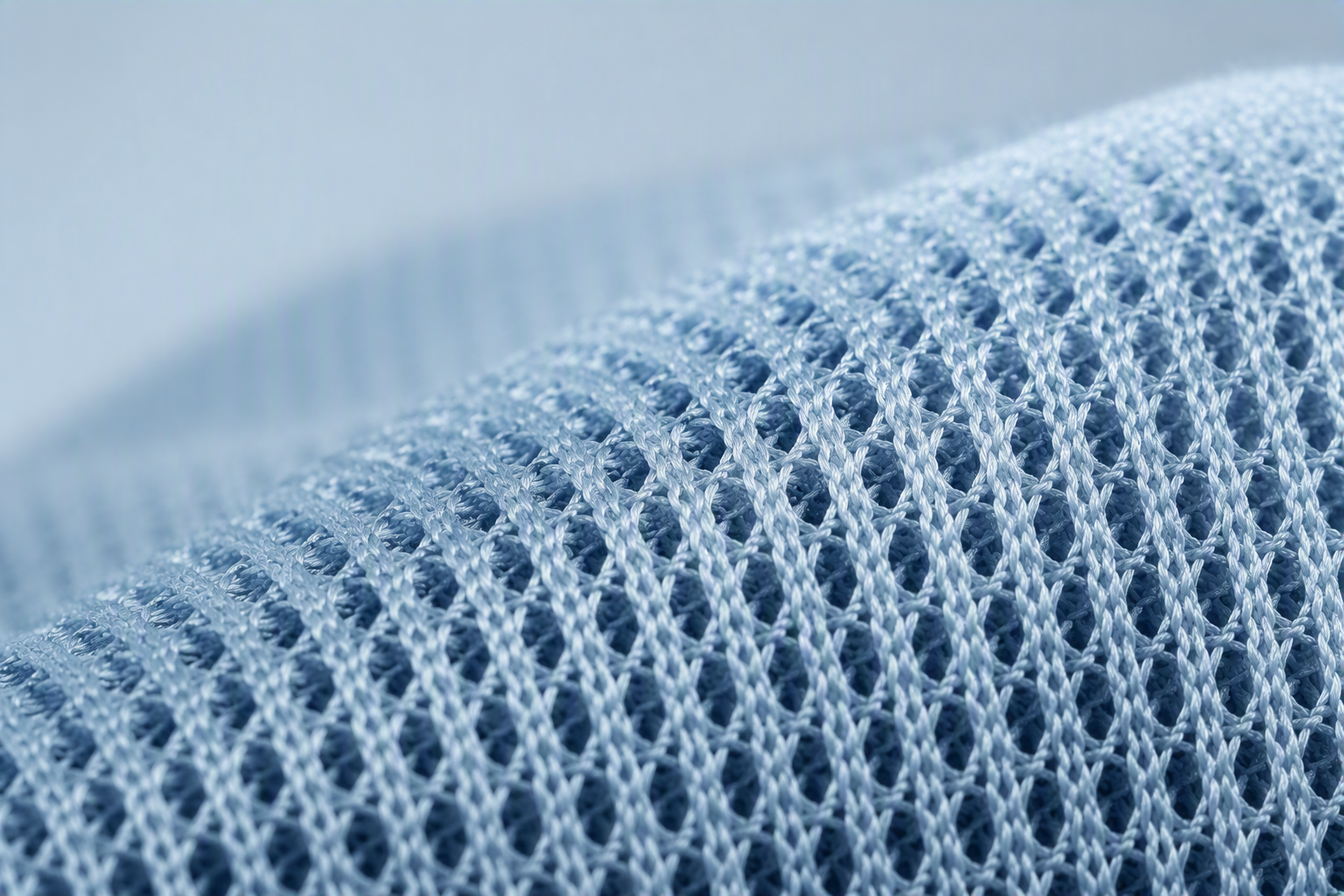
Open weaves leave microscopic air channels so heat escapes by convection instead of building up.
Breathable weaves and airflow
Open knits and moderate thread counts (roughly 300–500) leave microscopic air channels running through the fabric. Instead of pooling against your skin, warm air rises and escapes by convection while cooler room air takes its place. This is why a lightweight, lower-density blanket often outperforms a thick one plastered with "cooling technology" buzzwords: airflow beats marketing every time. Best for: sleepers who run warm but don't sweat heavily.
Moisture-wicking and evaporative cooling
Fibers like bamboo viscose and Tencel lyocell pull sweat off your skin and spread it across a wide surface area so it evaporates quickly. Evaporation is the body's own air-conditioning system — a blanket that wicks well simply gets out of its way. Contrast that with ordinary cotton, which absorbs sweat, saturates, and clings: a damp regular blanket feels clammy for hours, while a wicking cooling blanket keeps skin dry through a night-sweat episode. Best for: sweaty sleepers.
Cool-touch fibers and the Q-max rating
Q-max is a laboratory measure of how quickly a fabric conducts heat away from your skin at the moment of contact — the higher the number, the cooler the fabric feels. Few brands publish the comparison values side by side, so here they are: standard cotton sits around 0.11, silk around 0.19, and genuinely engineered cooling fibers — nylon/mica blends, polyethylene yarns, quality "ice silk" knits — reach 0.3 to 0.44 or higher.
A practical rule of thumb: a Q-max of at least 0.2 feels noticeably cool, and 0.3 or above feels meaningfully cool. Conversely, a "cooling" claim with no published Q-max value and no disclosed fiber content is a red flag. Best for: people who love the cold-side-of-the-pillow feeling and want it to last.
Phase change materials (PCMs)
PCM fabrics embed microscopic capsules — technology originally developed for NASA spacesuits and commercialized as Outlast "thermocules" — that absorb excess heat when you run hot, store it, and release it back when you cool down. It's the only mechanism that buffers temperature in both directions, which makes PCM the best match for sleepers whose temperature genuinely swings: the hot-flash-then-chill cycle of menopause is the textbook case. The honest limitation is that capsule capacity saturates, so the buffering effect is strongest in the first hours of the night.
Types of Cooling Blankets
"Cooling blanket" is an umbrella term covering several quite different products, and mixing them up is the fastest way to buy the wrong thing. Here's the full taxonomy:
Passive fabric cooling blankets. The most common type by far: bamboo, Tencel, or ice-silk-style knits with no power source and no fill. They're silent, machine-washable, work anywhere, and offer the best value for the typical hot sleeper. Everything in the mechanisms section above applies to this category.
Cooling weighted blankets. Glass-bead fill wrapped in a breathable, cool-touch cover — the calming deep-pressure of a weighted blanket without the usual sauna effect. The standard guidance is to choose one around 10% of your body weight. Important safety exclusions: they are not for infants or toddlers, and anyone with circulation, respiratory, or mobility issues should skip them or ask a clinician first.
Active and electric cooling systems. Water-circulating mattress pads and bed fans that push chilled water or air through your bed. They can outperform any fabric in extreme heat, but they're expensive, need power, produce some noise — and strictly speaking, they aren't blankets at all. Think of them as a different product category for a more severe problem.
Then there's the naming question that confuses almost everyone: blanket versus quilt versus comforter. A cooling blanket is a single layer of engineered fabric. A cooling quilt adds a thin layer of breathable fill — typically 150–250 GSM — between two cooling faces, something like the Breeza Cooling Summer Quilt, and suits people who want that tucked-in, covered duvet feeling without the duvet heat. A comforter is the loftiest and warmest of the three, and even "cooling" versions usually run warmer than either a blanket or a quilt.
Blanket, quilt, comforter: same family, very different loft and warmth.
Cooling Blanket Materials Compared
Material determines mechanism, so this is where the buying decision is really made:
Bamboo viscose — breathable and strongly moisture-wicking, with naturally antibacterial properties and a soft, cool drape. A dependable all-rounder, especially for sweaty sleepers on a mid-range budget.
Tencel / eucalyptus lyocell — best-in-class moisture management. It moves sweat away faster than nearly any natural-fiber alternative and still feels dry to the touch while doing it. Slightly pricier, worth it for heavy night sweats.
Cotton and linen — breathable and budget-friendly, and linen in particular vents heat beautifully. But their cool-touch performance is low (Q-max around 0.11–0.14), so they feel temperature-neutral rather than cold. Good baseline, not a true cooling upgrade.
Engineered "ice silk" and nylon/mica fibers — the highest Q-max ratings (0.3–0.44+), delivering the immediate cold-to-touch sensation most people picture when they hear "cooling blanket." Quality varies enormously between brands, which brings us to the fine print.
Now the consumer-protection part almost nobody tells you: "ice silk" is not a regulated term. Sometimes it describes genuinely engineered cooling yarn; sometimes it's rebranded polyester with none of the conductive performance. Before trusting any label, verify three things — the actual fiber content and percentages, a published Q-max value, and an OEKO-TEX certification confirming the fabric was independently tested for harmful substances. As a benchmark for what good disclosure looks like, the Breeza Cooling Ice Silk Blanket publishes both its Q-max rating and its OEKO-TEX certification directly on the product page. Whatever brand you end up buying, that is the standard of transparency to demand before handing over your money.
From bamboo to engineered ice silk: material choice decides how a cooling blanket actually cools.
Do Cooling Blankets Actually Work? What the Evidence Says
Let's be precise, because this is where marketing usually gets loose. No fabric can refrigerate you. A cooling blanket works by conducting heat away from your skin faster, letting sweat evaporate more efficiently, and preventing heat from building up under the covers — full stop. Judged against that honest standard, the answer is yes, they work.
The formal evidence is encouraging but thin. A small 2021 study of 20 participants found that people sleeping under cooling bedding in a bedroom deliberately set 3°C (5.4°F) warmer than normal still reported sleeping well — and preferred the cooling setup. That's promising, but twenty people is a pilot study, not proof. Search a database like PubMed and you'll find a rich literature on temperature and sleep in general, but only a handful of trials on consumer cooling bedding specifically. Any brand claiming its blanket is "clinically proven" to transform your sleep is running ahead of the data, and it's fair for you to know that.
So here's the balanced verdict. If your problem is heat trapped by your current bedding — you sleep fine in winter but wake up sweaty under the same duvet in summer — a well-made cooling blanket genuinely helps, night after night. If your bedroom is 90°F (32°C) with no ventilation, it will take the edge off but won't replace air conditioning. And if you have persistent, drenching night sweats, no blanket addresses the underlying cause. Are cooling blankets worth it? For a genuine hot sleeper, a one-time purchase that works silently every night with zero energy cost is one of the best value-per-dollar upgrades in sleep.
Who Should Use a Cooling Blanket?
Hot sleepers and people with a high resting metabolism. If you radiate heat, sleep with one leg out, and flip the pillow for the cold side, you're the core audience — a cooling blanket for hot sleepers addresses the exact layer trapping that heat.
Couples with a thermostat mismatch. One partner can cool their own side of the bed without freezing the other. It's dramatically cheaper than a dual-zone mattress system — and cheaper still than the nightly thermostat negotiation.
People with night sweats or menopausal hot flashes. Wicking fabrics shorten the clammy recovery after a sweat episode, and PCM designs buffer the hot-flash-then-chill swing. Two caveats: a blanket manages the symptom, not the cause, and Mayo Clinic notes that persistent night sweats can signal medication side effects, thyroid problems, or other conditions worth raising with your doctor. Our guide to night sweats causes and cooling bedding covers the topic in depth.
Warm climates, poorly ventilated bedrooms, and energy-savers. If your bedroom holds heat, or you'd like to raise the AC setpoint 2–3°F (about 1–1.5°C) and let your bedding absorb the difference, cooling bedding pays for itself over a summer of electricity bills.
And who should skip it: infants and young children, full stop — babies can't regulate body temperature well, and both loose bedding and overcooling carry real risks, so keep cooling blankets out of cribs entirely. Anyone with impaired temperature sensation — from diabetes, circulation problems, or nerve disorders — should also check with a clinician first, because they may not notice becoming too cold overnight.
The core audience: sleepers whose bedding, not bedroom, is what runs hot.
How to Choose, Use & Care for a Cooling Blanket
The buyer's checklist. Five things to verify before checkout:
Disclosed fiber content — the exact fibers and their percentages, not just "cooling fabric."
A published Q-max value — at least 0.2, and 0.3+ if you sleep very hot or live in a hot climate.
OEKO-TEX certification — independent testing for harmful substances, and a good proxy for a manufacturer that documents things properly.
Appropriate weight and size — roughly 200–350 GSM for a year-round cooling blanket, sized with enough overhang that it stays on the bed.
Machine washability — a cooling blanket you can't easily wash will stop cooling, because body oils clog the fibers that do the work.
The red flags, in short: "cooling" polyester with no specifications, and gel-infused surfaces that feel icy in the store but saturate within minutes of body contact. For the complete decision framework, read how to choose a cooling blanket that isn't a gimmick.
Use it right. The cool-touch side — usually the smoother, silkier face — goes against your skin, because contact conduction is what creates the cold sensation. And don't retire it in autumn: use it alone in summer, add a light layer over it in the shoulder seasons, and put it under a duvet in winter, where it quietly prevents mid-night overheating. You'll find more tips for sleeping cool in hot weather in our companion guide.
Care for it properly. Wash cold on a gentle cycle, skip fabric softener and bleach entirely — both coat the fibers and destroy the wicking that makes the blanket work — and air dry or tumble on low. We cover the full routine, stain treatment included, in washing a cooling blanket without ruining the chill.
Know its lifespan. Expect two to five years of real cooling performance with regular use. When the cool-touch feel or the moisture-wicking noticeably fades, it has done its service; here's how long cooling blankets last (and how to extend it) if you want to squeeze out every season.
In winter the cooling layer goes underneath — the duvet warms, the blanket stops the 2 a.m. overheat.
Consumer vs. Medical Cooling Blankets: Not the Same Thing
One genuinely confusing thing about this search term: in a hospital, a "cooling blanket" means something entirely different. Medical cooling blankets are active, water-circulating devices used for targeted temperature management — treating dangerous fever and heat stroke, and protecting the brain after cardiac arrest. They are regulated medical devices, operated under clinical monitoring, with precise temperature control measured in fractions of a degree.
The consumer cooling blankets covered in this article are passive comfort products. They are not designed to treat fever, heat stroke, or any medical condition, and they cannot lower core body temperature the way a clinical device can. The quick comparison:
Method: consumer — passive fabric that dissipates heat; medical — actively chilled water circulating through the blanket.
Purpose: consumer — nightly sleep comfort; medical — emergency and therapeutic temperature control.
Temperature control: consumer — none, it follows your body and the room; medical — precise and clinician-set.
Where you get one: consumer — any bedding retailer; medical — hospitals only.
If you landed here because someone has a high fever or heat illness, skip the bedding aisle and contact a medical professional.
The Bottom Line: Building a Cooler Sleep Setup
So, what is a cooling blanket? It's the one layer of your sleep microclimate engineered to let heat out instead of holding it in — and choosing one is simpler than the marketing suggests. First identify your problem: sweaty (prioritize wicking bamboo viscose or Tencel), simply warm (prioritize breathability and a high Q-max cool-touch fabric), or swinging between hot and cold (look at PCM). Then verify the specs: disclosed fiber content, a published Q-max of 0.2 or better, and OEKO-TEX certification.
Remember, too, that a blanket is one layer of a system. Breathable sheets matter, and because heat pools around your head and neck, a cooling pillow such as the Breeza Cooling Memory Pillow often delivers as much relief as the blanket itself — and if light or warmth around your eyes is what wakes you, a breathable option like the Breeza Cooling 3D Sleep Mask closes the loop.
One last fork to leave you with. If you want an airy top layer you can sprawl under on hot nights, a cooling blanket is the right shape. If you want that covered, tucked-in duvet feeling without the heat, a cooling summer quilt will suit you better. Either way, the principle is the same: your body does its best sleeping when it can cool down — give it bedding that helps instead of fighting it.
Written by
The Breeza Team
Sleep & cooling experts
We're the research and product team behind Breeza. We test cooling fabrics, dig through sleep science, and write practical guides to help hot sleepers stay cool through the night.