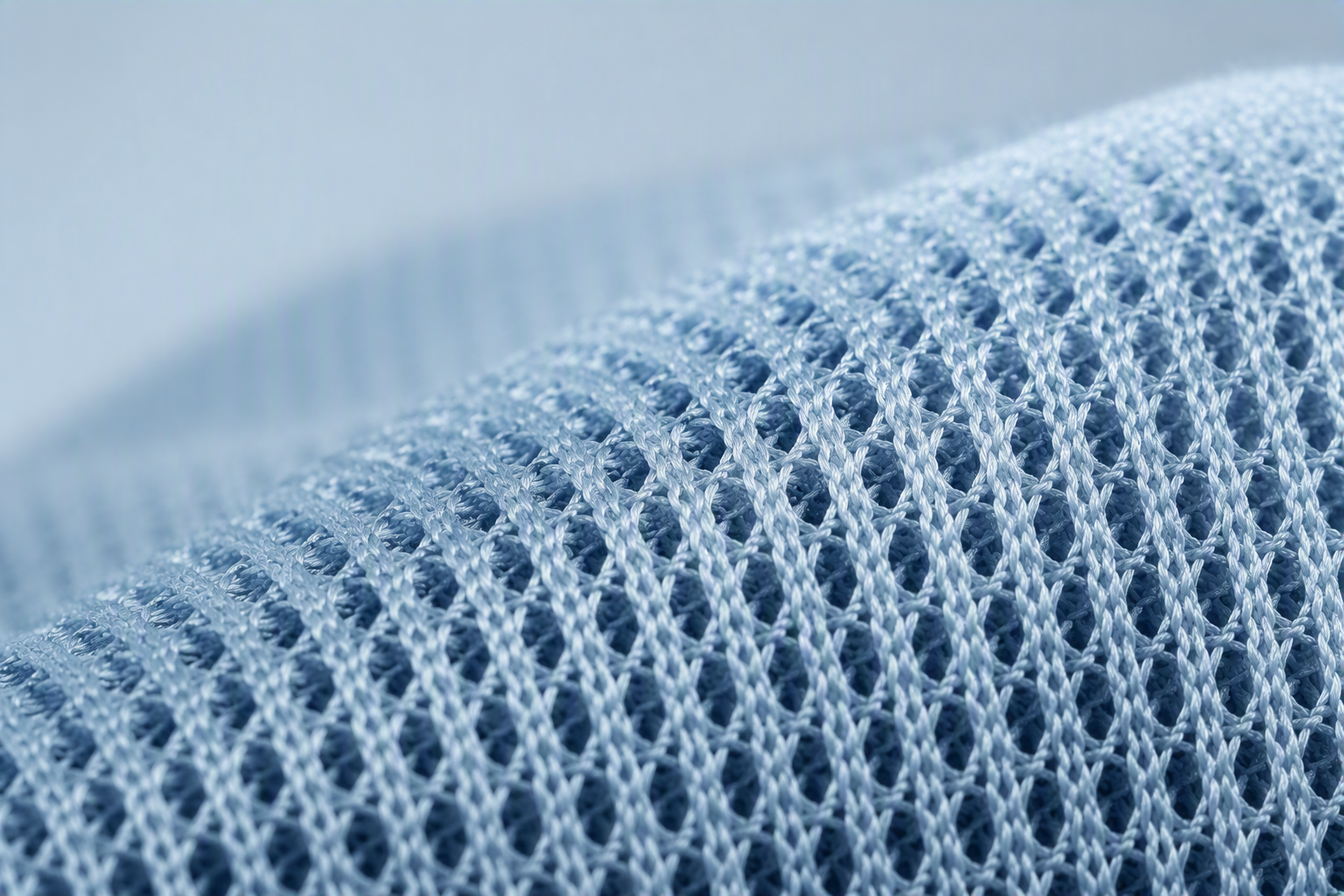
Cooling Blanket Care: How to Make the Chill Last for Years
Learn what really degrades a cooling blanket's chill, how to revive one that stopped feeling cold, and the simple care habits that keep it cold for years.
Jul 2026· 18 min read
Key takeaways
Woven-in cooling fiber lasts 3-5 years with proper care; sprayed-on cooling coatings fade within months and cannot be restored.
A blanket that “stopped working” is usually clogged with body oil or laundry residue — a strip wash reverses it; heat damage does not.
One hot dryer cycle can permanently warp cool-touch fiber — heat is the single most destructive mistake in cooling blanket care.
A breathable duvet cover halves washing frequency but mutes the contact chill — choose based on why you bought the blanket.
Store off-season in a breathable cotton bag, never vacuum-sealed plastic: trapped moisture and compression ruin fibers and fill.
Run the water-drop test quarterly — droplets should spread into the fabric within seconds; beading means residue is building up.
How Long Should a Cooling Blanket Stay Cool? (Quick Answer)
With consistent cooling blanket care, a quality blanket made with woven-in cooling fiber keeps a measurable cool-touch effect for 3–5 years. Coating-based "cooling" finishes, by contrast, fade within months and cannot be revived. And when a blanket suddenly stops feeling cold, the culprit is usually reversible residue buildup — not dead fiber.
That last point deserves repeating, because it is the single most common cooling-blanket worry: in most cases, a blanket that "stopped working" can be restored at home in one laundry session.
One thing this article is not: a washing tutorial. Exact machine settings, detergent choices and drying steps live in the step-by-step wash guide (settings, detergent, drying). Think of this page as the owner's manual for everything that happens between and beyond wash day — maintenance, diagnosis, restoration and replacement.
Here is the roadmap: what actually degrades cooling performance, realistic lifespan by material, a 5-minute diagnostic for a blanket that is not cold anymore, the strip-wash rescue protocol, the between-wash habits that double lifespan, storage that will not ruin the fibers, small repairs, and the honest signs it is time to replace.
A few minutes of care each week preserves years of cool-touch performance.
What Actually Degrades Cooling Performance: The 5 Enemies
Cool-touch fabrics work by conducting heat away from your skin faster than ordinary bedding. That property is measured as Qmax: roughly 0.15 W/cm² is the threshold where a fabric reads as noticeably cool on first touch, and quality ice-silk knits test at 0.3–0.4 W/cm². If the mechanism is new to you, start with why fabrics feel cool to the touch (Qmax, explained) — everything below makes more sense once you know the chill is physics, not magic.
Frequently asked questions
Share
Ready to shop?
Explore the Breeza range with free shipping and 30-day returns.
Each of the five enemies attacks that physics in a different way.
1. Body oil and sebum — the slow killer. Your skin sheds oil all night, every night. Over weeks, it deposits an invisible, insulating film across the cool-touch fibers. Heat can no longer conduct through cleanly, moisture can no longer wick, and the blanket gradually feels "less cold" without ever looking dirty. No competitor care page explains this, yet it is the number-one reason blankets lose their chill.
2. Laundry residue. Fabric-softener wax and overdosed detergent do from the outside what sebum does from the inside: they coat fibers and clog the microscopic wicking channels. The good news is that prevention is purely a settings problem — the wash guide linked above covers the exact detergent type and dose, so we will not restate it here.
3. Heat. Hot water, tumble dryers and radiators are the one enemy that causes permanent damage. Nylon-based cool-touch fiber begins to deform at around 60°C (140°F) — comfortably within a household dryer's normal range — and the phase-change (PCM) capsules used in some fabrics can rupture outright. A single hot cycle outweighs a year of nightly use. There is no fix for melted fiber.
4. UV and direct sun. Prolonged direct sunlight embrittles synthetic fibers, fades dye and can shrink fine weaves. Shade-drying is not fussiness; it is fiber preservation.
5. Mechanical wear. Abrasion, pilling and snags roughen the smooth contact face of the fabric. Because conductive cooling depends on maximum skin-to-fiber contact, a pilled surface measurably feels warmer even when the fiber underneath is perfectly healthy.
There is also a fork in the road that determines everything about long-term care: blankets with cooling woven into the fiber itself degrade slowly and can usually be restored, while blankets with sprayed-on or coated "cooling finishes" wash out within months and cannot be brought back. If you are not sure which type you own, our explainer on what a cooling blanket actually is breaks down the construction types in plain language.
Lifespan by Material: What to Expect and What Fails First
"How long does a cooling blanket last?" has no single answer — it depends almost entirely on the material family. Here is what realistic ownership looks like, and what tends to fail first in each case.
Each cooling material ages differently — and fails differently.
Ice silk / nylon cold-touch knits: 3–5 years. These dense 250–300 GSM knits have the highest Qmax and the best restoration odds. They fail through heat damage and surface pilling, almost never through the cooling fiber simply "wearing out."
Bamboo viscose and lyocell: 2–4 years. These soften with every wash — which many owners like — and can shrink if exposed to heat. The moisture-wicking that drives their cooling persists longer than the crisp hand-feel does.
PCM (phase-change) fabrics: 2–3 years. The heat-absorbing capsules, typically tuned to a transition point around 28°C (82°F), lose capacity with accumulated wash cycles. This is gradual chemistry, not damage, and no home treatment reverses it.
Cotton-blend summer quilts: 5+ years of fabric life. The shell outlasts everything above, but the 150–200 GSM fill decides the real lifespan: once loft is permanently bunched or flattened, the quilt sleeps hotter and lumpier no matter how clean it is.
Cooling pillow covers and memory foam: cover 2–3 years, foam core 3–4. Pillows are a different care universe — the removable cover on the Breeza Cooling Memory Pillow, for example, launders like a garment while the foam core should only ever be spot-cleaned and aired.
The failure mode tells you the fix. Residue film → strip wash (below). Heat warp → replacement, full stop. Loft loss → redistribute and re-fluff the fill. Surface pilling → a gentle de-pill (also below).
One honest reframe before moving on: cooling bedding is consumable performance gear, like running shoes. The materials trade some durability for thermal performance, so budget for a lifecycle rather than expecting forever. For a deeper look at how each fabric family behaves, see the best cooling bedding materials, ranked for hot sleepers.
Diagnostic Guide: Why Is Your Cooling Blanket Not Cold Anymore?
A cooling blanket that stopped working feels like a small betrayal — you bought it for one job. Before you shop for a replacement, run this 5-minute check in order, because the most common causes are also the most fixable.
Step 1: Rule out the environment. Contact cooling is relative to room temperature. Above roughly 24°C (75°F) of ambient heat, even a healthy blanket has little coolness to offer — the Sleep Foundation's guidance on bedroom temperature puts the ideal sleeping range near 18–20°C (65–68°F). A non-breathable mattress protector under you or a thick duvet cover over the blanket will also mask the chill completely; our guide on how to use a cooling blanket covers the setup that lets it actually touch your skin. And if the whole room runs hot, fix that first with our hot-weather bed-cooling guide.
Step 2: Feel for residue. Run your palm across the center of the blanket, then across an edge that rarely touches skin (the footer corner is ideal). If the center feels waxy, draggy or less slick, residue is your answer. Confirm with the water-drop test: place a single drop of water on the fabric. On a healthy wicking surface it spreads and darkens the weave within seconds; if it beads up and sits, the wicking channels are clogged. This is the reversible case — skip to the strip wash below.
Step 3: Look for heat damage. Shiny patches, stiff or crunchy areas, or a rippled, slightly melted-looking texture mean the fiber itself has been warped by heat. This is permanent. No wash, freezer trick or product will restore a heat-damaged cool-touch weave.
Step 4: Consider plain age. If the blanket is 3–5 years old, has been cared for correctly, and the chill has faded evenly and gradually, the fiber has simply served its life. That is a replacement conversation, not a repair one.
Here is the reassuring statistic from returns and support patterns across the industry: the overwhelming majority of "my cooling blanket died" cases land in Step 2 — residue — the one cause that is fully reversible at home.
The water-drop test: beading like this means residue is clogging the wicking channels.
The Strip-Wash Protocol: Restoring a Residue-Clogged Blanket
This is the full restoration protocol (the wash guide carries only the one-line version). It works by dissolving accumulated sebum, softener wax and detergent film without adding any new residue.
Run a cold cycle with no detergent at all, plus a double rinse. Plain cold water and agitation alone lift a surprising amount of loosely bound film. Many blankets recover right here.
Still waxy? Run one wash with a sport or tech-wash detergent — the kind formulated for moisture-wicking athletic gear. These are built to dissolve body-oil film without leaving brighteners or softeners behind. Use a small dose.
Optional: a white-vinegar rinse pass. Add about 120 ml (half a cup) of white vinegar to the rinse compartment and run a rinse cycle. Vinegar helps break down mineral and softener deposits. Do not combine it with bleach, ever.
Air-dry flat, in the shade. After all the effort above, one hot dryer pass would undo everything — permanently this time.
The strip wash: minimal detergent, mesh bag, cold water only.
Verify the result. Repeat the water-drop test: the drop should now spread within a few seconds. Then compare hand-feel between the center and that never-used footer corner — they should feel close to identical.
Set expectations honestly. A residue-clogged blanket typically recovers most of its original cool-touch feel — owners usually describe it as "80–90% of new." A heat-damaged blanket recovers nothing, which is why Step 3 of the diagnostic comes before this protocol: know which case you have before investing the effort.
Between-Wash Cooling Blanket Care Habits That Double the Lifespan
The gap between wash days is where lifespans are actually won. These habits cost minutes and delay both residue buildup and fiber wear.
Shake and air weekly. Take the blanket outside, shake it hard, and let it air for 2–3 hours in the shade. Airing releases trapped moisture and body oils before they set into the fibers.
Rotate, or add a top sheet on heavy-sweat nights. Running two blankets in rotation halves the wear on each. If you sweat heavily, a thin sheet between you and the blanket on the worst nights spares the fibers the heaviest sebum load — and if soaking sweats are routine rather than weather-driven, that is worth understanding on its own; see what causes night sweats and how cooling bedding helps, and note that Mayo Clinic's overview of night sweats recommends talking to a doctor when they are frequent and unexplained.
The duvet-cover trade-off, quantified. A breathable cotton or bamboo cover roughly halves your washing frequency, because the cover absorbs the oil and sweat instead of the blanket. The cost: it mutes the contact chill — the icy first-touch feel is the first thing a cover erases. Worth it if you have pets or sweat heavily; counterproductive if the first-touch cooling is exactly why you bought the blanket.
Manage the skin side of the equation. A shower before bed cuts the sebum load your blanket absorbs and, as a bonus, supports sleep onset — Harvard Health's sleep resources cover why a pre-bed warm shower helps you fall asleep. Keep leave-on lotions light, and keep benzoyl-peroxide products (common in acne care) far away from cooling bedding: they bleach permanent pale spots and leave film. If you share the bed with pets, keep claws off fine cool-touch knits — snags are the start of most mechanical wear.
Do not overwash. Every cycle abrades fiber a little, so more washing is not better care. Follow the frequency schedule in the step-by-step wash guide rather than washing on suspicion.
Flat, shaded, patient: the only drying method with zero risk to cool-touch fiber.
Off-Season Storage That Does Not Ruin the Fibers
More cooling blankets are ruined in storage than in use. The failure is almost always moisture or compression, and both are preventable in ten minutes.
Wash and dry completely first. Any trapped moisture — even slight dampness in a seam — means mildew by next summer. Give the blanket a full extra day of air-drying beyond "feels dry."
Use a breathable cotton or linen bag, never plastic. Vacuum-seal bags and sealed plastic bins trap humidity, crush quilt fill, and set permanent creases into cool-touch fabric. A cedar block near (not touching) the blanket deters moths; skip mothballs, which leave an oily residue on synthetics.
Choose a cool, dry, dark spot — a closet shelf beats an attic or garage, both of which cycle through heat and humidity extremes. If you remember one mid-season task, make it this: refold the blanket along different lines once, so no crease has months to set.
Breathable cotton and cedar — never vacuum bags or plastic bins.
Un-storing checklist for next summer: air the blanket outdoors in the shade for two hours, hand-smooth any fold lines while the fabric is slightly damp from the fresh air, and run the water-drop wicking test before the first night. Two minutes of checking beats discovering a problem at 2 a.m. in a heatwave.
Pilling, Snags and Small Repairs
Small surface damage is worth fixing on a cooling blanket specifically because conduction depends on smooth skin contact — a pilled or snagged contact face measurably feels warmer even when the fiber underneath is healthy.
De-pilling, safely. Use a fine fabric shaver on its lowest setting, and test it on a hidden corner first. Never take a razor blade to an ice-silk weave: it cuts the knit loops and turns a cosmetic problem into runs and holes. Worried about pilling and shrinking in the first place? Quality cool-touch knits washed cold per their care label should do neither; bamboo and viscose blends are the ones with real shrink risk under heat.
Snag rescue. Never cut a pulled loop. Instead, insert a fine needle from the back of the fabric at the base of the snag, catch the loop, and pull it through to the back side, then gently stretch the fabric to even out the tension.
Opened seams. Three steps: pin the seam edges together as they originally sat, whip-stitch with fine polyester thread every 2–3 mm, and finish with a backstitch at each end. Five minutes now prevents a fist-sized hole after the next wash.
When to Replace: 6 Signs Your Cooling Blanket Is Done
Run this checklist once a year, or whenever the strip wash disappoints:
The chill never returns even after a full strip wash.
Shiny, stiff or rippled heat-damage patches — the fiber is warped.
Water beads and sits on the surface after stripping: the wicking structure is dead.
Odor survives deep cleaning (bacteria have colonized the fill or backing).
Fill is permanently bunched or flat and re-fluffing no longer redistributes it.
The entire contact face is thinned, fuzzed or pilled.
Two or more signs, and you are maintaining a regular blanket that used to be a cooling one.
When you do replace, buy for durability at the fiber level: cooling woven into the yarn, a published Qmax figure, and OEKO-TEX certification consistently outlast coated bargains — that is exactly why the Breeza Cooling Ice Silk Blanket is built as woven-in fiber rather than a finish. For the full 7-point buying checklist, see our guide to choosing a blanket that keeps its chill.
And retire the old one gently: an aging cooling blanket that no longer earns its place on the bed still makes an excellent couch throw, guest-room spare or pet blanket. Most synthetics are also accepted by textile-recycling drop-offs — landfill is the last resort, not the default.
Your Cooling Blanket Care Calendar
Here is the entire maintenance system at a glance — the schedule that keeps a good blanket cold for years:
Weekly: shake outdoors, air 2–3 hours in the shade.
Every 2–4 weeks: wash, using the settings in the wash guide linked above.
Quarterly: run the water-drop residue check; strip wash if the drop beads.
Season's end: full clean, complete dry, breathable-bag storage with cedar.
Yearly: assess against the 6 replacement signs.
Print it, tape it inside the linen closet, and the whole system runs on autopilot. Good sleep depends on a consistently cool, dark bedroom night after night — the CDC's sleep guidance makes the same point about consistency across all sleep habits.
In the end, cooling blanket care comes down to one sentence: you cannot make a blanket colder than the room, but you can stop it becoming warmer than it should be. Every habit in this guide — the airing, the strip wash, the shade-drying, the breathable storage — is really just Qmax preservation. Protect the fiber, and the chill takes care of itself.
Written by
The Breeza Team
Sleep & cooling experts
We're the research and product team behind Breeza. We test cooling fabrics, dig through sleep science, and write practical guides to help hot sleepers stay cool through the night.