What Is the Best Cooling Blanket? A Hot Sleeper's Guide
No single cooling blanket is best for everyone. Use this 7-point lab scorecard — Qmax, fabric, GSM, certifications — to judge any blanket on real evidence.
Jul 2026· 18 min read
Key takeaways
There is no universal best cooling blanket — the right pick depends on why you overheat: night sweats, a humid room, a heat-radiating partner, or a heavy-duvet habit.
Demand a published Qmax score of at least 0.34 W/cm²; ordinary cotton sits near 0.2, while high-performance ice silk reaches 0.4–0.5+.
First-touch coolness is not enough — sustained 3 a.m. comfort depends on breathability, moisture-wicking, and an appropriate GSM fabric weight.
OEKO-TEX Standard 100 verifies chemical safety, not cooling performance — a trustworthy blanket needs both the certificate and a published Qmax.
Laundry heat and fabric softener are the fastest ways to ruin cooling fibers; cold washing and shade air-drying preserve performance for years.
Duvet-kickers who still need to feel covered should choose a low-GSM cooling summer quilt, not a thicker blanket.
The best cooling blanket pairs a lab-verified cool-touch surface — a Qmax score of at least 0.34 W/cm² — with breathable, moisture-wicking construction, a fabric weight (GSM) matched to your climate, and an independent safety certificate such as OEKO-TEX Standard 100. No single blanket is “best” for everyone; the right choice depends on why you overheat at night.
That answer probably sounds more technical than the roundups you’ve been scrolling — and that’s the point. Most “best of 2026” lists never explain how they judged anything. This guide hands you the 7-point scorecard textile labs use, so you can evaluate any cooling blanket on the market — including ours — on evidence instead of marketing.
The best cooling blanket depends on why you sleep hot — night sweats, humidity, a warm partner, or a heavy-duvet habit.
Why “The Best Cooling Blanket” Depends on How You Sleep Hot
Before you compare a single product, diagnose your heat problem. Hot sleepers fall into a few distinct groups, and each group weights the buying criteria differently:
Night sweats and hot flashes. If menopause, medication, or a condition like hyperhidrosis is soaking your sheets, prioritize moisture-wicking fibers plus a high-Qmax contact surface — and rule out medical causes first; Mayo Clinic’s overview of night sweats is a sensible starting point. Our guide to night sweats and cooling bedding covers the bedding side in depth.
A warm, humid bedroom. Airflow matters most. Open weaves and a low fabric weight beat any “icy” surface treatment when the air itself is heavy.
Frequently asked questions
Share
Ready to shop?
Explore the Breeza range with free shipping and 30-day returns.
Look for double-sided cooling and consider sizing up, so each sleeper gets their own microclimate instead of sharing one heat pocket.
A heavy-duvet habit. You crave the “covered” feeling without the insulation. Your answer is a light quilted layer — not a bare throw, and not a thicker blanket.
There’s also a physiological reason bedding matters this much. Your core body temperature has to drop by roughly 1–2°F (0.5–1°C) to initiate deep sleep, and the Sleep Foundation puts the ideal bedroom at 65–68°F (18–20°C). Every layer on your bed either helps that natural drop or fights it all night — we unpack the mechanism in our guide to thermoregulation and sleep.
How Cooling Blankets Actually Work (and What They Can’t Do)
A cooling blanket is passive cooling, not refrigeration. Three mechanisms do all of the work:
Conductive heat transfer. High-conductivity fibers — nylon, mica-infused “ice silk,” polyethylene — pull heat away from your skin faster than cotton can, producing that signature cool-to-the-touch fabric sensation.
Moisture-wicking. Capillary channels in the yarn move sweat to the outer surface, where it evaporates. Evaporation removes several times more heat than conduction alone, which is why wicking matters so much for sweaty sleepers.
Airflow. Open knits and low-density weaves let warm, humid air escape instead of trapping it against your body like a greenhouse.
Some blankets add phase-change materials (PCM): microcapsules that absorb heat as they melt, like microscopic ice packs woven into the fabric. PCM feels impressive in a showroom, but the capsules saturate after a few hours. That’s why some “instant cool” blankets feel warm by 3 a.m. — once the PCM is full, only breathability can keep you comfortable.
A word of honesty that most brand blogs skip: peer-reviewed evidence on cooling blankets specifically is still thin. What the research does show consistently — see this review of how thermal environment affects sleep — is that heat and humidity increase wakefulness and suppress deep sleep. A blanket is not an air conditioner; it works best in an already-cool room, alongside the fundamentals of healthy sleep.
New to the category? Start with the basics. Want the full science? Take our deep dive into the physics of cooling fabrics. The one-sentence version: a genuinely good cooling blanket combines a high-conductivity contact surface with sustained breathability — and judging only the first touch is the single biggest buying mistake.
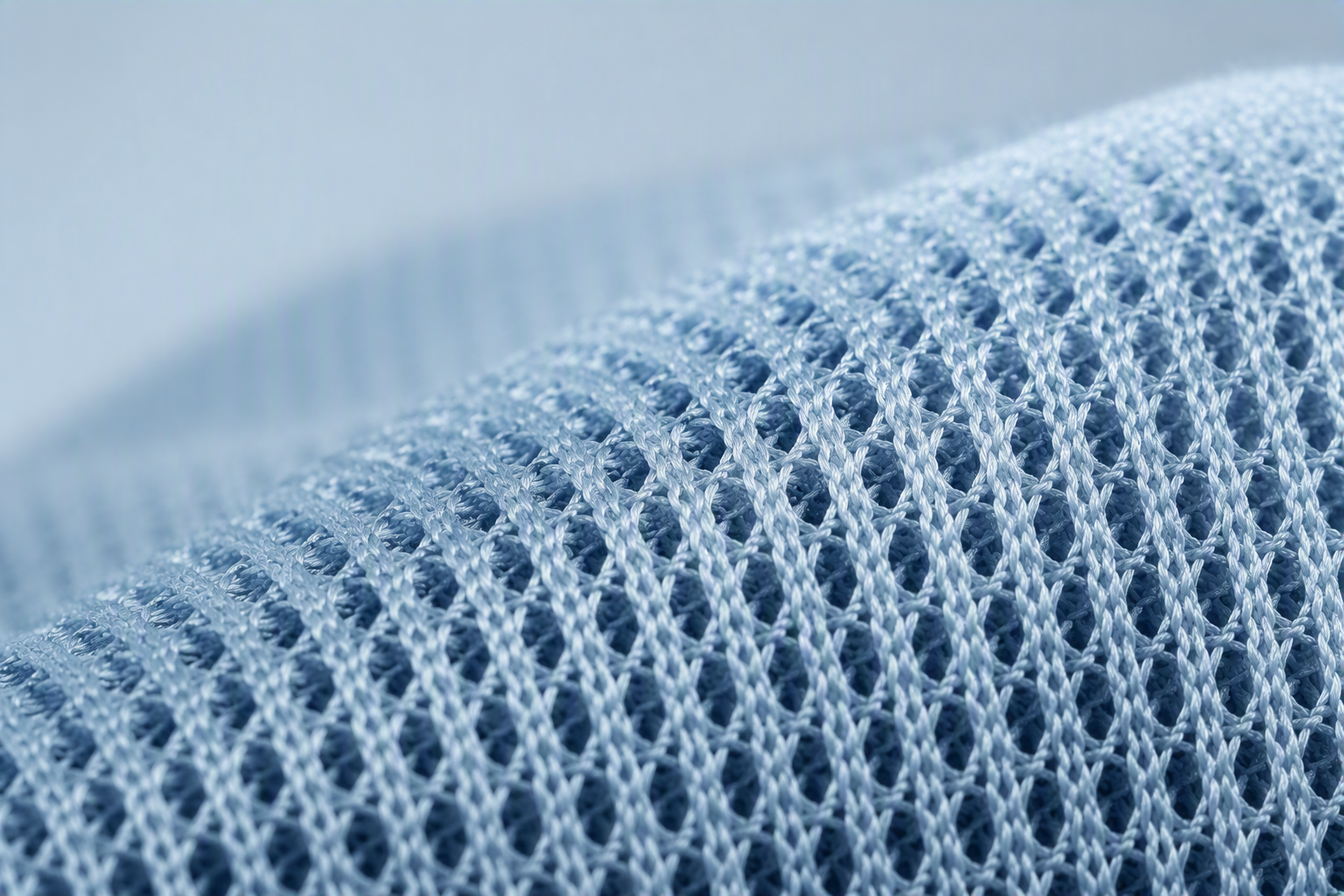
A high-conductivity contact face plus a breathable structure — the combination that separates real cooling from first-touch gimmicks.
The 7 Criteria That Separate the Best Cooling Blankets From Gimmicks
Textile labs don’t evaluate “coolness” as a vibe; they measure it. Here’s the scorecard the rest of this guide unpacks, criterion by criterion:
Care durability — whether the cooling survives the laundry
Price versus trial policy — because a showroom touch only tests criterion one
That last point deserves emphasis. A 30-night or longer sleep trial is the only realistic way to test sustained cooling. You can test first touch in a store aisle; you can only test 3 a.m. performance in your own bed, in your own climate, next to your own partner.
Qmax Score: The Cool-to-the-Touch Number Most Brands Won’t Publish
Qmax measures maximum instantaneous heat flux — how fast heat leaves your skin in the first moments of contact with a fabric — expressed in watts per square centimeter (W/cm²) and measured with the Kawabata testing method. It’s the objective version of “feels cool.”
Here’s the reference ladder to keep in your head:
Flannel and brushed fleece: around 0.1 W/cm² (sleeps warm)
Silk: around 0.19 W/cm²
Regular cotton: around 0.2 W/cm²
Bamboo and polyester cooling blends: 0.2–0.3 W/cm²
A credible “cooling” claim: at least 0.34–0.4 W/cm²
High-performance ice-silk and nylon-mica fibers: 0.4–0.5+ W/cm²
The buyer’s rule is simple: if a product page doesn’t state a Qmax number, treat the cooling claim as unverified. Publishing the figure costs nothing for a brand that actually ran the test — it’s why we print the lab-measured Qmax on the spec sheet of the Breeza Cooling Ice Silk Blanket.
One honest caveat, because plenty of competitor explainers hide it: Qmax only captures the first seconds of contact. A blanket can score 0.45 and still sleep hot at 3 a.m. if it can’t breathe. Qmax is necessary but not sufficient — the remaining six criteria decide sustained comfort.
Qmax puts a number on that first-touch chill — but it only measures the opening seconds of contact.
Fabric: Thermal Conductivity vs. Breathability
Fabrics do two different cooling jobs, and very few do both well.
Conduction champions are smooth synthetics. Ice silk — typically a nylon blend, sometimes enhanced with mica or polyethylene — transfers heat quickly, and its flat-knit surface maximizes skin contact. More contact area means faster conduction, which is why smooth fabrics feel cooler than fuzzy ones at the exact same room temperature.
Breathability champions are cellulosics. Bamboo viscose and Tencel lyocell absorb and release moisture rapidly, keeping the microclimate under the blanket dry through the night. Cotton breathes well but absorbs sweat and dries slowly — a hidden problem for night-sweats sleepers, who can end up lying under a damp, clammy layer by morning.
What to avoid: dense brushed-polyester fleece sold with a blue “Arctic,” “Chill,” or “Frost” label and no disclosed fiber content. If the materials section doesn’t name the fibers, the product name is doing all the cooling. For a full fiber-by-fiber ranking, see our guide to the best cooling bedding materials.
Weight and GSM: Why Lighter Usually Wins
GSM — grams per square meter — is the spec that turns “lightweight” from a feeling into a number you can compare across brands:
Summer cooling throw or blanket: roughly 200–300 GSM
Lightweight cooling summer quilt: roughly 150–250 GSM fill weight
All-season comforter: roughly 300–400 GSM
Winter comforter: 400+ GSM
Lighter fabric traps less air, and trapped air is insulation — that’s the whole physics lesson. But near-zero weight has a cost: many sleepers physically cannot fall asleep without the gentle pressure cue of being covered. The fix isn’t “no layer”; it’s a light, breathable quilted layer.
One niche worth knowing about: cooling weighted blankets pair glass-bead weight with a breathable shell for anxiety-prone hot sleepers. They can work, but go in with clear eyes — every extra gram is insulation your body must overcome, and that matters most on humid nights, when heat measurably fragments your sleep.
Construction: Single-Sided vs. Double-Sided, Weave and Stitching
Single-sided blankets put the cooling fibers on one face only. They cost less, but you have to keep that face against your skin all night — a losing game if you toss and turn. Double-sided cooling survives restlessness and lets couples share one blanket without negotiating its orientation at 2 a.m.
Weave matters too. Percale and open gauze breathe freely; sateen feels silkier but sleeps noticeably warmer. On quilts, box-stitching keeps the fill from migrating and bunching into insulating hot spots — an easy detail to check in product photos.
And the question everyone asks: which side of a cooling blanket goes up? The cooling face — usually the smoother, shinier, cooler-feeling side — goes down, against your skin. Rest your palm on both faces for five seconds; the side that feels colder is the working side. On a double-sided design, either orientation works.
Certifications: What OEKO-TEX Standard 100 Actually Verifies
Roundups name-drop OEKO-TEX constantly without ever defining it, so here is what OEKO-TEX Standard 100 actually means: an independent laboratory has tested every component of the textile — fibers, threads, dyes, finishes, even buttons — against a list of more than 1,000 harmful substances, and the certification must be renewed annually. Class I, the strictest level, is certified safe for babies.
Why it matters specifically for cooling bedding: cooling finishes and dyed synthetics sit directly against bare, often sweaty skin for eight hours a night, and warmth plus moisture is exactly the condition under which chemical residues transfer. For this product category, chemical safety is not an optional luxury spec.
Just as important is what the certificate does not claim: OEKO-TEX is a safety certification, not a cooling-performance certification. A trustworthy cooling blanket needs both — an independent safety certificate and a published Qmax number. Treat the pair, together, as the “verified” box on your checklist.
Care and Wash Durability: Will It Still Be Cool After 20 Washes?
Here’s the criterion every roundup skips: laundry can destroy cooling performance, and heat is the killer. Hot water and hot tumble-drying permanently warp high-conductivity synthetic fibers, and they can strip coating-based cooling finishes in as few as three to five washes.
Check the care label before you buy, not after:
Machine-washable cold — 86°F (30°C) or below — on a gentle cycle
Explicit “no fabric softener” guidance (a good sign the brand understands its own product)
Air-dry or low-heat tolerance stated plainly, not left vague
Fabric Face-Off: Ice Silk vs. Bamboo vs. Tencel vs. Cotton
Ice silk wins first touch; bamboo and Tencel win the long night. The best designs pair one of each.
Here’s how the main contenders score across the criteria that matter:
Ice silk (nylon-mica blends). Best-in-class first touch (Qmax 0.4–0.5+), good wicking, very durable when washed cold. Verdict: maximum instant relief, the pick for heavy night sweats.
Bamboo viscose. Moderate first touch (0.2–0.3 W/cm²), excellent moisture handling, gentle on sensitive skin, moderate durability. Verdict: steady all-night regulation at a fair price.
Tencel lyocell. Cool feel similar to bamboo, best-in-class moisture management, strong eco profile from closed-loop production, higher price. Verdict: the premium all-night regulator.
Cotton (percale weave). Modest Qmax (~0.2), great airflow, absorbs sweat but dries slowly, inexpensive and hard-wearing. Verdict: the breathable budget baseline.
Linen. Low-to-moderate cool touch, superb airflow, dries fast, distinctive texture. Verdict: best for hot, dry climates.
The best-of-both answer: modern premium designs pair an ice-silk contact face with a breathable reverse side, so you get 0.4+ first-touch cooling and 3 a.m. breathability in one blanket. If a design forces you to choose between the two, keep shopping.
Cooling Blanket vs. Summer Quilt vs. Comforter: Which Do You Need?
Three categories, three different jobs:
Cooling blanket or throw — a single conductive layer for naps, the couch, and over-sheet use on hot nights. Fastest relief, least “tucked-in” feeling.
Cooling summer quilt — light, breathable fill (150–250 GSM) for people who need to feel covered all night without real insulation. If you kick off your duvet nightly but can’t sleep uncovered, this is your category: a low-GSM option like the Breeza Cooling Summer Quilt, not a thicker blanket.
Comforter — genuine insulation for cold sleepers and winter. If you’re weighing warmth levels, our cooling comforter vs regular duvet comparison walks through the fill choices.
One layering mistake to avoid at all costs: putting a regular quilt on top of a cooling blanket traps the very heat the blanket just moved away from your body. The cooling layer goes outermost — or alone.
And one whole-system note, briefly: your head and face shed a disproportionate share of body heat, which is why cooling pillows and cooling sleep masks exist as companions to the blanket. For most hot sleepers, though, the blanket is the right first purchase.
Red Flags: How to Spot a Fake “Cooling” Blanket
No Qmax, no fiber content. “Cooling” appears in the product name, but the fine print says “100% polyester microfiber” — or there’s no materials section at all.
Stock blue photography as the only evidence. Icy renders, snowflake icons, and frost-covered logos are art direction, not data.
The 10-minute review pattern. “Felt cool at first, hot by midnight” signals a high-conductivity face with no breathability. “Stopped working after a few washes” signals a sprayed-on finish rather than fiber-level cooling.
Unverifiable superlatives. “#1 doctor recommended,” “NASA technology,” “military grade” — without a linked test report, named standard, or certification number, these are decorations.
Ten minutes spent reading a product’s one-star reviews will tell you more about its sustained cooling than the entire product description.
How to Use and Wash a Cooling Blanket So It Stays Cool
Even the best cooling blanket underperforms when it’s used wrong. The usage rules:
Cooling side against bare skin for heavy sweats; over a thin, breathable sheet for milder overheating.
Spread it fully flat — a folded blanket doubles its own insulation.
Layer nothing heavy on top of it.
Keep the room at 65–68°F (18–20°C) if you can. The blanket assists your body’s temperature drop; it doesn’t replace a cool room.
And the wash protocol that preserves the cooling for years:
Cold water — 86°F (30°C) maximum — on a gentle cycle.
Mild liquid detergent; skip bleach entirely.
Use a mesh laundry bag to protect the knit from snags.
No fabric softener. Ever.
Air-dry in the shade — never tumble-dry hot, and keep it out of direct sun.
Store it in a breathable cotton bag. Plastic bins trap moisture, and mildew ruins wicking channels for good.
Cold wash, no softener, shade dry — heat in the laundry is the fastest way to ruin a cooling blanket.
For placement, timing, and layering tactics — including how to sleep cool in summer when the bedroom itself won’t cooperate — see the full usage guide.
The Best Cooling Blanket Checklist (Copy This Before You Buy)
Screenshot this list and check every line before you spend a cent:
Published Qmax of at least 0.34 W/cm² — 0.4+ if you have heavy night sweats
Disclosed fiber content: a conductive contact face plus a breathable structure
GSM appropriate to your climate (200–300 for summer throws; 150–250 fill for quilts)
Double-sided cooling if you toss and turn or share the bed
OEKO-TEX Standard 100 (or an equivalent independent chemical-safety certificate)
A care label allowing cold wash and air-dry — cooling that’s designed to survive laundry
A 30+ night sleep trial, because first touch is testable in a store and 3 a.m. is not
So — what is the best cooling blanket? It’s the one that passes all seven checks for your sleep profile: instant-relief ice silk for drenching night sweats, breathable cellulosics for steady all-night regulation, a light summer quilt for duvet-kickers who still need to feel covered. We designed the Breeza Cooling Ice Silk Blanket and our summer quilt to pass every line of this checklist, and we publish the lab numbers so you don’t have to take our word for it. Whatever you end up buying — buy the numbers, not the adjectives.
Written by
The Breeza Team
Sleep & cooling experts
We're the research and product team behind Breeza. We test cooling fabrics, dig through sleep science, and write practical guides to help hot sleepers stay cool through the night.