Why a Hot Night Wrecks Your Sleep
If you've ever tossed for hours during a heat wave, kicked off the sheets at 2 a.m., or woken up sticky and groggy after what felt like a full night in bed, you already know the answer to why can't I sleep when hot on a gut level. But the reason runs deeper than simple discomfort. Heat doesn't just make you restless — it directly interferes with the biological machinery your brain uses to fall asleep and stay there.
Sleep is not a passive switch. It's an actively orchestrated process that depends on your body shedding heat at exactly the right moment. When the room is too warm, that process stalls, and the consequences ripple through every stage of the night.
This article breaks down the actual physiology of heat and sleep — what's happening inside you, why it matters for the quality of your rest, and what you can realistically do about it.

Your Body Has to Cool Down to Fall Asleep
Here's the part most people never learn: to initiate sleep, your core body temperature has to drop. It falls by roughly 1 to 2°F (about 0.5 to 1°C) in the lead-up to bedtime, and that descent is one of the strongest internal signals that it's time to sleep.
Your brain pulls this off in a clever way. Blood vessels in your hands and feet widen — a process called vasodilation — pushing warm blood toward the skin's surface so heat can radiate away into the surrounding air. That's why warm feet under a blanket can actually help you nod off faster: they're a sign your body is dumping core heat efficiently. The cooling of your core is tightly choreographed with your internal clock and the evening rise of melatonin, a chain of events we unpack in our deeper look at how thermoregulation governs your rest.
Now picture trying to run that process in a stuffy 78°F bedroom. The air around you is already warm, so there's nowhere for the heat to go. Your body wants to offload temperature, the environment refuses to accept it, and the result is a frustrating biological traffic jam — you're physiologically primed for sleep but thermally stuck.
Why heat and sleep are fundamentally at odds
The core problem is one of physics meeting biology. Heat moves from warmer objects to cooler ones. When your bedroom is hot, the temperature gradient between your skin and the air shrinks, and so does your ability to cool down. That single mismatch is the root of why hot weather ruins sleep for so many people.
How Heat Sabotages Each Stage of the Night
Even if you do manage to drift off in a warm room, the damage isn't over. Elevated temperature disrupts sleep architecture — the carefully sequenced cycle of light, deep, and REM stages your brain moves through about every 90 minutes.
- Deep (slow-wave) sleep takes the first hit. This is the most physically restorative stage, when tissue repair and growth-hormone release peak. It also depends on your body sitting at its coolest point of the night. Heat fragments and shortens it.
- REM sleep is especially fragile. During REM, your body largely switches off its ability to regulate temperature through sweating and shivering — you essentially become temporarily cold-blooded. A warm room hits REM hard, and lost REM means worse mood, memory consolidation, and emotional resilience the next day.
- You wake up more often. Warmth raises the number of brief arousals and full awakenings, even ones you don't consciously remember. These micro-interruptions shred the continuity that makes sleep feel restorative.

The frustrating irony is that the hotter it gets, the more your sleep stages fragment — and the more fragmented your sleep, the worse you regulate everything the next day, including your perception of temperature itself.
The Sweat Trap: When Cooling Backfires
Sweating is your body's emergency cooling system, and it works beautifully — outdoors, in moving air. In bed it often backfires.
Sweat only cools you when it evaporates. Trapped under a thick duvet or against a non-breathable mattress, moisture has nowhere to go. It pools against your skin, the humidity around your body climbs, and evaporation grinds to a halt. Now you're warm and damp, which is the exact recipe behind the maddening cycle of waking up hot and sweaty in the middle of the night.
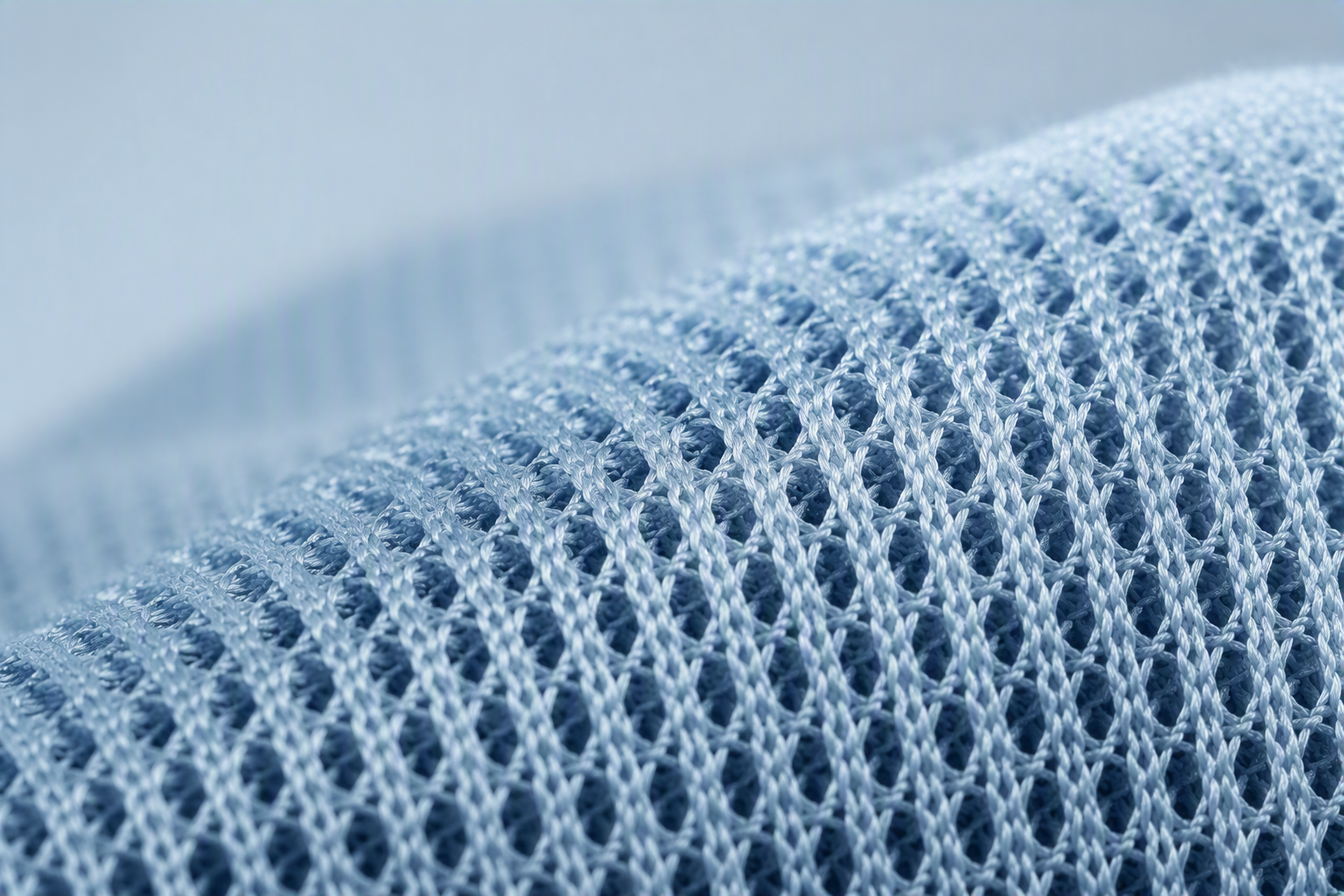
This is why bedding matters far more than people assume. A breathable comforter and moisture-wicking sheets keep that humid microclimate around your body from building up, letting sweat evaporate the way it's supposed to. The fabric isn't doing anything magical — it's simply getting out of the way so your natural cooling can function.
Who Feels the Heat Most
Not everyone struggles equally on a warm night. Several factors raise your sensitivity:
- Age. Older adults regulate temperature less efficiently and tend to run warmer at night.
- Hormones. Menopause, pregnancy, and the menstrual cycle all shift your thermal set point, which is why night sweats spike during these phases.
- Body composition and metabolism. A higher resting metabolic rate generates more heat to shed.
- Your sleep partner. Sharing a bed means sharing body heat — two people under one duvet is a small furnace.
- Where you live. Humid climates blunt evaporation, so the same temperature feels far hotter at night.
If you recognize yourself here, you're not imagining the struggle. Your physiology is genuinely working against the conditions in your room.
The Long-Term Cost of Hot, Broken Sleep
A single sweaty night is annoying. A pattern of them adds up. Chronically warm, fragmented sleep is linked to daytime fatigue, impaired concentration, irritability, blunted immune function, and disrupted appetite-regulating hormones. Heat steals disproportionately from deep and REM sleep — the two stages that do the heaviest lifting for your brain and body — so even a "full" eight hours can leave you depleted when those hours were too warm.
There's also a feedback loop worth naming: poor sleep makes you less tolerant of heat the following night, and the hotter you feel, the worse you sleep. Breaking that cycle is usually less about willpower and more about fixing the environment.
What Actually Helps
The good news is that the fix is mostly mechanical. You're not trying to force your body to do something new — you're removing the obstacles in its way.
- Set the room cool. Most sleep research points to a bedroom around 65 to 68°F (18 to 20°C) as the sweet spot. Cooler air gives your core somewhere to dump heat.
- Take a warm shower an hour before bed. Counterintuitive, but it works: the warmth triggers vasodilation, and as you cool afterward, your core temperature drops on cue.
- Choose breathable, moisture-wicking bedding. Light, airy layers let heat and humidity escape instead of trapping them against you. A genuinely breathable cooling blanket does this without sacrificing the cozy weight most people want over them.
- Cool your extremities. A foot sticking out from the covers, or a cool damp cloth on the wrists, accelerates heat loss through the skin.
- Improve airflow. A fan moving air across your skin restarts the evaporation your bedding may be blocking.

For a hot-weather toolkit that goes well beyond bedding, our complete guide to cooling sleep products for hot sleepers walks through every layer of the bed worth upgrading.
The Bottom Line
You sleep worse when it's hot because sleep itself is a cooling event. Your brain triggers a drop in core temperature to start the night, protects your deepest stages while you're at your coolest, and depends on heat continually escaping your body. A warm room blocks every step of that sequence — stalling sleep onset, fragmenting deep and REM sleep, and trapping you in a humid layer of your own sweat.
The remedy isn't to fight your biology but to support it: keep the room cool, keep the air moving, and choose bedding that lets heat leave instead of holding it in. To see exactly how temperature, your circadian clock, and your sleep stages all fit together, start with our full breakdown of the science of staying cool at night. Once your environment is working with your body instead of against it, sleep stops being something you chase on hot nights — and becomes something that simply happens.