


Why So Many People Sleep Hot — and Why It Matters
If you kick the covers off at 2 a.m., flip the pillow to find the cool side, or wake up with the sheets stuck to your back, you are not alone. Sleeping hot is one of the most common and most underrated sleep complaints. It quietly fragments your rest, and most people blame their mattress, their stress, or their age long before they suspect the real culprit: a sleep environment that traps heat instead of releasing it.
Being a hot sleeper is rarely a character flaw or a sign that something is wrong with you. It usually comes down to physics. Your body generates heat all day and all night, and the bedding wrapped around you can either help that heat escape or seal it in like a duvet-shaped greenhouse. Choosing the right cooling sleep products for hot sleepers is the difference between a bed that fights your body and one that works with it.
This guide is the comprehensive, no-fluff resource we wish existed when we started building breathable bedding. We will cover the real science of why heat ruins sleep, how cooling fabrics actually work, the full range of cooling sleep products, and exactly how to assemble a setup that keeps you comfortable from lights-out to sunrise.

The hidden cost of overheating
A warm room and heavy bedding do more than make you uncomfortable. When your body cannot shed heat, it cannot complete the temperature drop it relies on to fall and stay asleep. The result is the familiar pattern of tossing, micro-awakenings, and that groggy, unrefreshed feeling the next morning — even after a full eight hours in bed.
Night sweats make this worse. Once your sheets and comforter become damp, they cling to your skin, and humidity traps heat against your body instead of letting it evaporate away. The cycle feeds itself: you get warm, you sweat, the sweat does not evaporate, you get warmer. Breaking that cycle is the whole point of cooling sleep products.
There is a knock-on cost during the day, too. Fragmented, overheated sleep leaves you reaching for caffeine, struggling to focus, and feeling irritable — and poor daytime habits then feed back into a worse night. Many people accept this as "just how I sleep," but for a large share of hot sleepers the fix is not medical at all. It is environmental, and it starts with the bedding wrapped around you.
Who tends to sleep hot
Some people are simply more prone to overheating at night. Those who run warm naturally, people going through hormonal changes such as pregnancy or menopause, side sleepers whose bodies are wrapped tightly in covers, and couples sharing body heat under one comforter all feel it more acutely. Climate matters too: anyone in a warm or humid region, or sleeping through a heatwave, is fighting an uphill battle. Whatever the reason, the levers you can actually pull are the same — and they are almost all about the bed itself.
The Science of Why Heat Wrecks Sleep
To choose the right gear, it helps to understand what your body is actually trying to do at bedtime. Sleep is not just about being tired — it is tightly coupled to your core body temperature.
Your body has to cool down to fall asleep
In the hours before sleep, your core temperature naturally begins to fall, and that drop is one of the strongest biological signals that it is time to rest. To initiate sleep, your core temperature needs to decline by roughly 1°C (about 2°F) from its daytime peak. Your body does this in part by widening the blood vessels in your hands and feet, sending warm blood to the skin so heat can radiate away into the room.
If your bedding blocks that heat from escaping, your body cannot complete the drop. You stay just warm enough that deep sleep keeps slipping out of reach. This is why a too-warm bed delays sleep onset and lightens the sleep you do get.
Heat fragments deep and REM sleep
Your core temperature stays low throughout the night and only begins to rise again toward morning as part of your natural wake-up process. Excess heat in the night disrupts this rhythm. Studies of sleep in warm conditions consistently show more awakenings, less slow-wave (deep) sleep, and less REM sleep — the two stages most responsible for physical recovery and memory consolidation.
In short, overheating does not just make it harder to fall asleep; it degrades the quality of the sleep you eventually get. That is why two people can spend the same hours in bed and wake up feeling completely different.
This also explains the frustrating experience of waking repeatedly in the second half of the night. As your sleep naturally lightens toward morning, you become more sensitive to disturbances — and a bed that has slowly accumulated heat and humidity over several hours is a constant, low-level disturbance. You may not fully wake, but you surface just enough to lose the deepest, most restorative stretches. Keeping the bed cool and dry all night long, not just at lights-out, is what protects that later sleep.
Humidity is the silent saboteur
Temperature gets all the attention, but humidity is just as important. Your body cools itself partly through evaporation — sweat lifting off your skin and carrying heat with it. When the air and your bedding are already saturated with moisture, that evaporation slows or stops, and you feel hotter than the thermometer says you should. This is why a humid 24°C night can feel far more oppressive than a dry one. Truly effective cooling sleep products manage moisture, not just temperature.
There is also a microclimate right against your skin — the thin pocket of air and humidity trapped between your body and your bedding. Even in a cool, dry room, that pocket can become warm and damp if your covers do not let it breathe. This is the layer cooling bedding is really designed to manage: not the whole room, but the few centimetres of air that actually touch you all night.
How Cooling Fabrics and Materials Actually Work
"Cooling" is one of the most abused words in bedding marketing. Fabric cannot generate cold the way an air conditioner does. What good cooling materials actually do is move heat and moisture away from your body faster than ordinary bedding — through conduction, breathability, and moisture management.

Conduction: pulling heat away on contact
Conduction is heat transfer through direct contact. Some fibers and weaves feel cool to the touch because they conduct heat away from your skin quickly, giving that pleasant "cool side of the pillow" sensation. Smooth, dense, flat-faced fabrics tend to feel cooler on contact than fluffy, lofted ones, because more of the fiber touches your skin and carries heat away.
This is why the surface you sleep against matters so much. A breathable, smooth sheet or cover can make the same fill feel dramatically cooler simply by improving that initial contact.
Breathability: letting heat and humidity escape
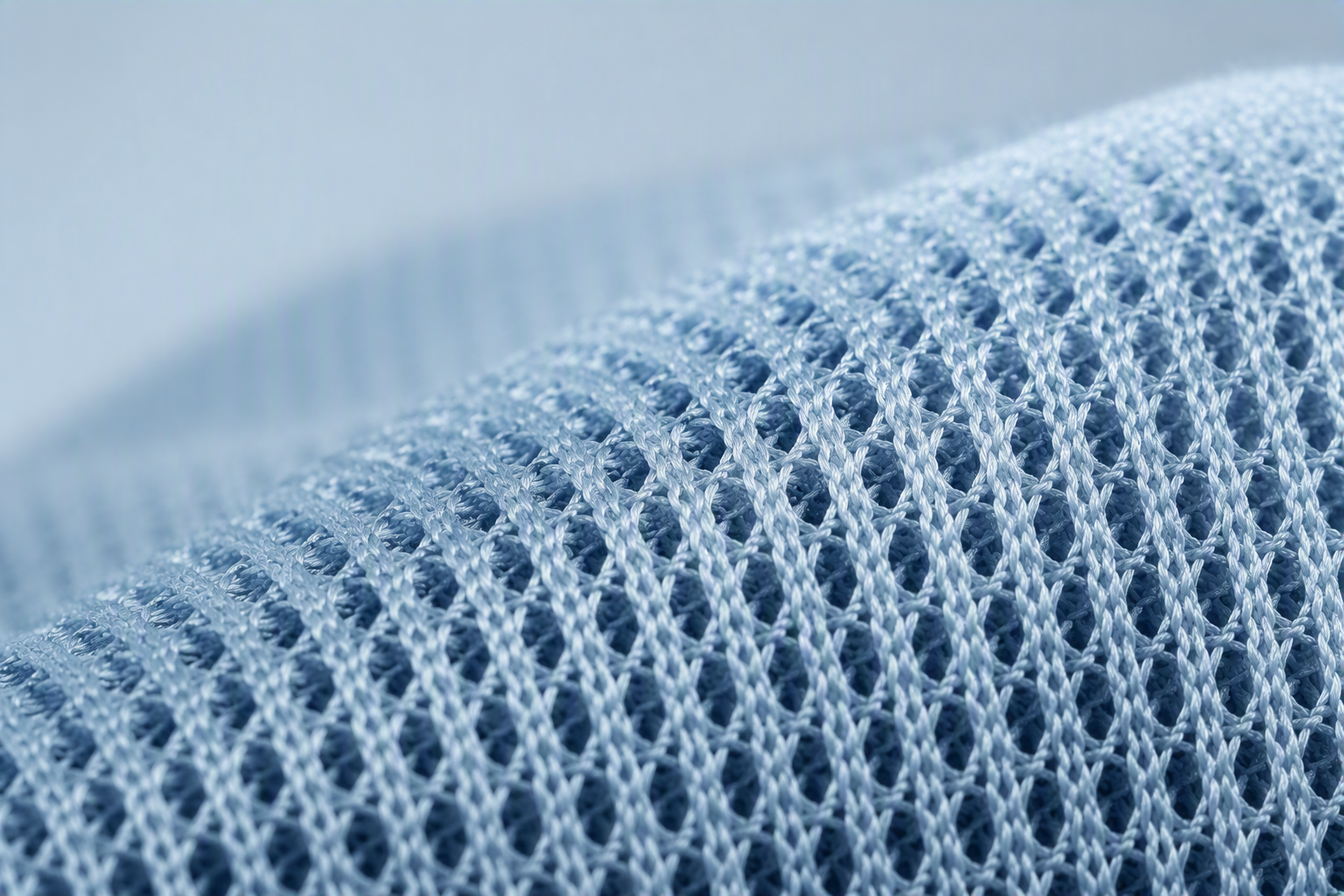
Breathability is about airflow — how easily warm, humid air can pass through the fabric and be replaced by cooler air. Loosely structured, open weaves and naturally porous fibers let your body heat vent upward and outward instead of pooling under the covers. Insulating materials do the opposite: they trap a layer of warm air against you, which is great in winter and miserable in summer.
The goal for hot sleepers is bedding that breathes — that releases heat as fast as your body produces it, so warmth never has a chance to build up.
Moisture-wicking: keeping you dry
Moisture management is the third pillar. Wicking fabrics pull liquid moisture away from your skin and spread it across a larger surface area so it can evaporate quickly. Dry skin feels cool; damp skin feels clammy and hot. The best cooling sleep products combine all three properties — they conduct heat away on contact, breathe to release it, and wick moisture so evaporation can do its job.
What the materials are made of
You will see a range of fibers marketed as cooling. Natural fibers like cotton (especially percale-weave cotton), linen, and bamboo-derived viscose are prized for breathability and moisture handling. Engineered fibers and finishes can boost conduction and wicking. There is no single "best" material — what matters is how the fiber, the weave, and the construction work together. A poorly constructed product made from a "cooling" fiber can still sleep hot, while a well-engineered one can keep you comfortable all night.
How to read cooling claims honestly
Marketing language around cooling is full of vague promises, so it pays to translate the claims into the three real mechanisms. "Cool to the touch" is a conduction claim — useful, but it describes the first few minutes, not the whole night. "Breathable" or "airflow" speaks to ventilation, which is what keeps heat from building over hours. "Moisture-wicking" or "stays dry" is about evaporation. A genuinely good product addresses all three, because each one fails without the others: conduction alone cools briefly then warms up, breathability alone does little if sweat cannot evaporate, and wicking alone cannot help if the fabric seals heat in. When you read a product page, look for evidence of all three rather than a single buzzword.
The Categories of Cooling Sleep Products
A cool bed is a system, not a single hero product. Each layer plays a role, and weak links undo the rest. Here is how the main categories fit together.
Cooling comforters and duvets
Your comforter is the single biggest variable in how hot you sleep, because it sits directly over your body and controls how much heat is trapped. A cooling comforter is engineered to provide the cozy weight and security you want without the heat penalty — using breathable fill and covers that vent warmth and wick moisture instead of sealing it in.
This is exactly the problem the Breeza Cooling Summer Quilt is built to solve: the comforting feel of a real duvet, designed to release body heat rather than store it, so you stay covered without overheating.
Cooling blankets
A cooling blanket is the lighter-weight cousin of the comforter. It is ideal for warmer nights, for layering, or for people who want a little coverage without much insulation. A good cooling blanket feels cool to the touch and breathes well, making it perfect for the in-between seasons or for sleepers who run especially warm and want minimal weight on top of them.
Cooling body pillows
Body pillows are not just for support — they change your sleep temperature too. A bulky, dense body pillow can trap heat along your torso and between your knees, exactly where many hot sleepers feel it most. A cooling body pillow gives you the ergonomic support of side-sleeping or pregnancy positioning while staying breathable, so the surface you hug all night does not become a heat trap.
The Breeza Cooling Body Pillow is designed around this idea: full-length support that breathes, so you get the comfort of a body pillow without the warmth most of them add.
Cooling sheets
Sheets are the layer touching your skin directly, so their conduction and breathability matter enormously. Crisp percale cotton, linen, and breathable engineered weaves all sleep cooler than dense sateen or flannel. Because sheets control that all-important first contact, upgrading them is often the single most cost-effective cooling change you can make.
Cooling mattress toppers and protectors
Heat builds up underneath you as well as on top. Memory foam in particular is notorious for trapping heat, because it conforms closely and limits airflow around your body. A breathable topper or a thin, ventilated mattress protector can prevent heat from pooling beneath you. If your mattress sleeps hot, addressing the surface you lie on can be just as important as the covers over you.
Cooling pillows for your head
Your head and neck deserve attention as well. A pillow that holds heat keeps your face warm all night, which is uncomfortable in its own right and can pull you out of deep sleep. Breathable pillow fills and covers, and the simple habit of flipping to the cooler side, both help. Treat the head pillow as part of the same system: there is little point cooling your body if your face is resting on a warm cushion.
How to Choose and Build a Cool Sleep System
Now for the practical part: assembling a setup that actually keeps you cool. Think in layers, from the mattress up.

Start with the surface you lie on
Begin at the bottom. If you sink into a heat-trapping mattress, no comforter will fully rescue you. Add a breathable topper or protector if your mattress runs hot, and make sure your bed frame allows some airflow underneath rather than sitting flush on the floor.
Get the sheets right
Next, choose breathable sheets in a cool-sleeping weave. This is the layer against your skin, so prioritize conduction and breathability here. A smooth, breathable sheet improves the cool-to-the-touch feeling of everything layered above it.
Choose a comforter sized to the season
Your comforter does the heavy lifting. For hot sleepers, choose one engineered to breathe and wick rather than insulate. If you sleep with a partner who runs colder, a breathable cooling comforter is a fair compromise: it keeps you from overheating without leaving them cold, because it regulates rather than simply removes warmth.
Add support that breathes
If you use a body pillow for side-sleeping, pregnancy, or back support, make sure it breathes too. The large surface area you hug all night can quietly add a surprising amount of heat if the pillow is dense and non-breathable.
Match the layers to your room and season
Finally, treat your bed as adjustable. In summer or a warm climate, lean on a lighter cooling blanket and breathable sheets. In cooler months, you can add a layer while keeping the breathable foundation, so you stay warm without trapping moisture. The point of a system is that you can dial it up or down. When you are ready to build yours, you can shop the full cooling range and choose pieces that work together.
Habits That Multiply the Effect
Even the best bedding works better inside a cool routine. These habits cost little and amplify everything your cooling sleep products do.
Set the room cooler than feels obvious
A bedroom in the cool range — many sleep experts point to somewhere around 18°C (about 65°F) as a useful target — supports the natural drop in core temperature. A room that feels slightly cool when you get in is often exactly right once you are under the covers.
Use the warm-bath trick
A warm shower or bath an hour or two before bed sounds counterintuitive, but it helps. The warmth brings blood to your skin, and as you cool down afterward your core temperature drops more steeply — sending a strong sleep signal. The point is the cool-down after the warm-up, not the warmth itself.
Cool your hands and feet
Because your body sheds heat through your hands and feet, keeping them uncovered or sticking a foot out from under the comforter is a genuinely effective trick. It is a small, free way to help your body release heat exactly where it is designed to.
Manage humidity and airflow
Run a fan to keep air moving and help sweat evaporate, and consider a dehumidifier if your bedroom is muggy. Moving, drier air makes breathable bedding work far better, because it speeds the evaporation your body relies on.
Mind the pre-sleep heat sources
Big late meals, alcohol, and intense late workouts all raise your core temperature and can keep it elevated into the night. None of these are forbidden, but spacing them earlier in the evening gives your body time to cool before you try to sleep.
Wear less, or wear the right thing
What you sleep in matters more than people expect. Heavy or non-breathable sleepwear traps a warm, humid layer against your skin and works directly against your cooling bedding. Either sleep light or choose breathable, moisture-wicking fabrics, so your clothing helps heat escape rather than holding it in. The same principle that governs your comforter governs your pajamas.

The Bottom Line for Hot Sleepers
Sleeping cool is not about willpower or simply turning down the thermostat. It is about working with your body's natural drive to lower its core temperature at night — and removing the obstacles that stop it. When heat and humidity can escape freely, your body completes its temperature drop, deep and REM sleep stabilize, and you wake up genuinely rested.
The path there is a system: a breathable surface to lie on, sheets that feel cool against your skin, a cooling comforter that releases heat instead of trapping it, supportive pieces that breathe, and a handful of simple habits that help your body do what it already wants to do. Each layer is modest on its own, but together they transform how you sleep.
If you only change one thing, change the layer that affects you most. For most hot sleepers that is the comforter, because it sits directly over the body and decides how much heat is trapped versus released. From there, work outward at your own pace — sheets, support, surface, and routine — and let each upgrade build on the last. There is no need to replace everything at once; even a single well-chosen breathable layer can be the difference between waking up drenched and waking up rested.
If you run hot at night, you do not have to choose between feeling covered and staying cool. Cooling sleep products for hot sleepers exist precisely so you can have both. Start with the layer that affects you most — usually the comforter — and build outward. When you are ready, shop the full cooling range and design a bed that finally works with your body instead of against it.

